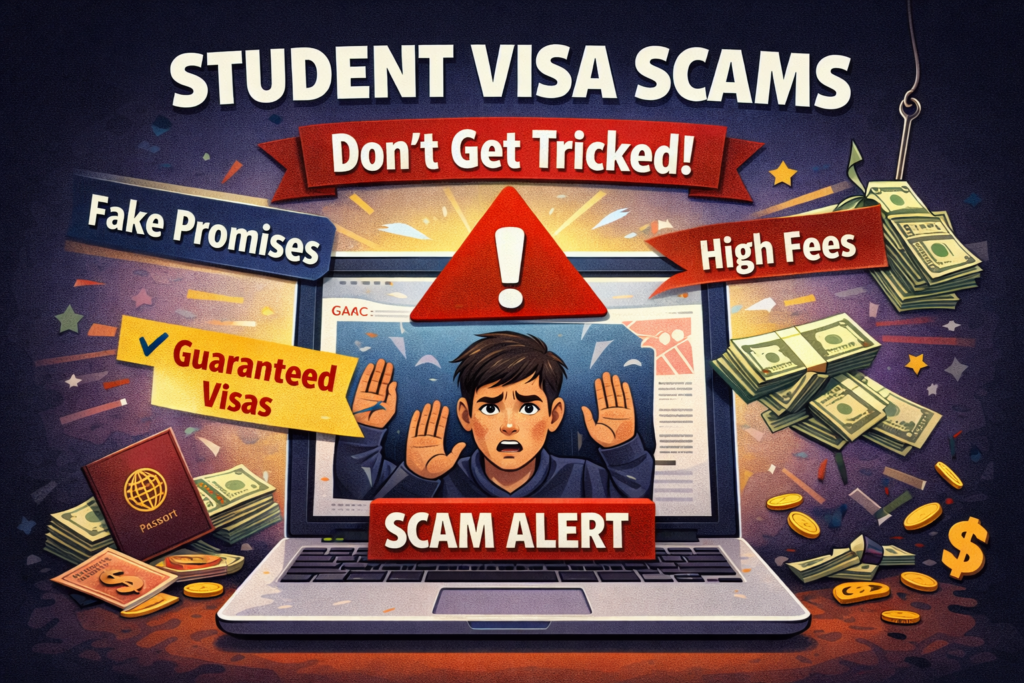
For many students, the road to an international degree starts with a complex web of visa documents. It is a high-stakes process, which is exactly why it is a frequent target for fraud. Visa scams promise a “fast track” to your destination but often lead to identity theft and financial loss. To help you navigate this safely, we have outlined the most common tactics used by scammers—and how you can spot them before it is too late.
The Illusion of Guaranteed Success
One of the most common tactics used by fraudulent visa services is the promise of guaranteed approval. In the academic and legal world of immigration, no third-party agent or consultant has the authority to guarantee a visa outcome, as these decisions are made solely with the consular officers of the host country. Scammers often use persuasive language, claiming to have “inside connections” or “special quotas” for students from specific regions. These claims are designed to create a false sense of security and justify the exorbitant fees they demand upfront. A legitimate educational consultant provides guidance and preparation, but they will always acknowledge that the final decision remains in the hands of the respective embassy or consulate.
Digital Deception and Phishing Tactics
In the current digital age, fraudsters have become masters of aesthetic deception. They frequently create “phishing” websites that mirror the official portals of government agencies such as the U.S. Department of State or the UK Home Office. These websites often use slightly altered domain names—for instance, using “.net” or “.org” instead of the official “.gov” or “.ac.uk”—and feature high-resolution logos to appear authentic. Students are often lured to these sites through unsolicited emails or social media advertisements. Once on the site, the applicant is prompted to enter sensitive personal data, including passport numbers and bank details, which are then used for identity theft or to facilitate fraudulent payments.
Impersonation and Psychological Coercion
Perhaps the most unpleasant tactic is the “Government Official” impersonation scam. In this scenario, a student may receive a phone call or a message from someone claiming to be an immigration officer or a local law enforcement authority. The scammer often uses caller ID falsification technology to make it appear that the call is coming from a legitimate government agency. They usually claim that there is a ‘problem’ with the student’s visa, that a “fine” must be paid immediately, or that an ‘error’ has occurred that could lead to rejection of the visa or even deportation. By creating an atmosphere of intense pressure and using fear, they force the student into making rushed, irrational decisions without verifying the caller’s identity.
Financial Red Flags and Untraceable Payments
Another distinctive feature of a visa scam is the demand for payment through unconventional and untraceable methods. Genuine government agencies and universities will never ask for visa fees or tuition deposits via cryptocurrency, gift cards, or private money transfer services. Scammers prefer these methods because they are nearly impossible to reverse once the transaction is complete. Furthermore, students should be suspicious of “service fees” that are requested before any official documentation, such as a Letter of Acceptance from a university, has been received. To learn more about similar scams and recommendations, take a look at one of our previous articles Scams in your DMs: how frauders use Instagram, TikTok, and Telegram to target students.
To reduce the risk of becoming a victim of fraud when applying for a visa, students should verify all information through official channels before taking any action. Contacting the university admissions office directly, consulting the official website of the immigration service, and seeking advice from certified education consultants are sensible measures that will help confirm the legitimacy of any request. Students are also advised to check the spelling and domain of email addresses, pay attention to unusual wording or grammatical errors, and avoid sharing confidential personal information with unverified individuals.
While staying safe is the priority, we also want to help you succeed. For legitimate, verified scholarship opportunities around the world, visit our website at okajak.com. You can also stay updated by following us on Instagram and Telegram, @okajakcom.
In conclusion, visa scams represent a significant threat to international students who are navigating complex application systems and planning life-changing education experiences. Recognizing common scam strategies and remaining vigilant can prevent financial loss and protect one’s legal status. By relying on official information sources, questioning unsolicited offers that sound “too good to be true,” and maintaining a cautious approach toward third-party services, students can safeguard themselves against fraudulent schemes and pursue their academic ambitions with confidence.
Sources:
https://www.uscis.gov/scams-fraud-and-misconduct/avoid-scams/common-scams
https://consumer.ftc.gov/articles/how-avoid-immigration-scams-get-real-help
Our website: okajak.com
Our article: Scams in your DMs: how frauders use Instagram, TikTok, and Telegram to target students